Consultations and follow-ups are free
Several Exomind pages in London, our own older page among them, speak of "cognitive health", "emotional balance" and "enhanced focus within one to two weeks", and quote percentages with no study behind them. This guide is written by the team that offers Exomind at our clinic on Devonshire Place and reviewed by our clinician. It gives you what the device is and what it is cleared for, the difference between medical TMS for depression and the wellbeing use sold in aesthetic clinics, the evidence as it stands, the safety screening that must come first, the London prices we found, and the honest answer to who should not have it.
What Exomind is
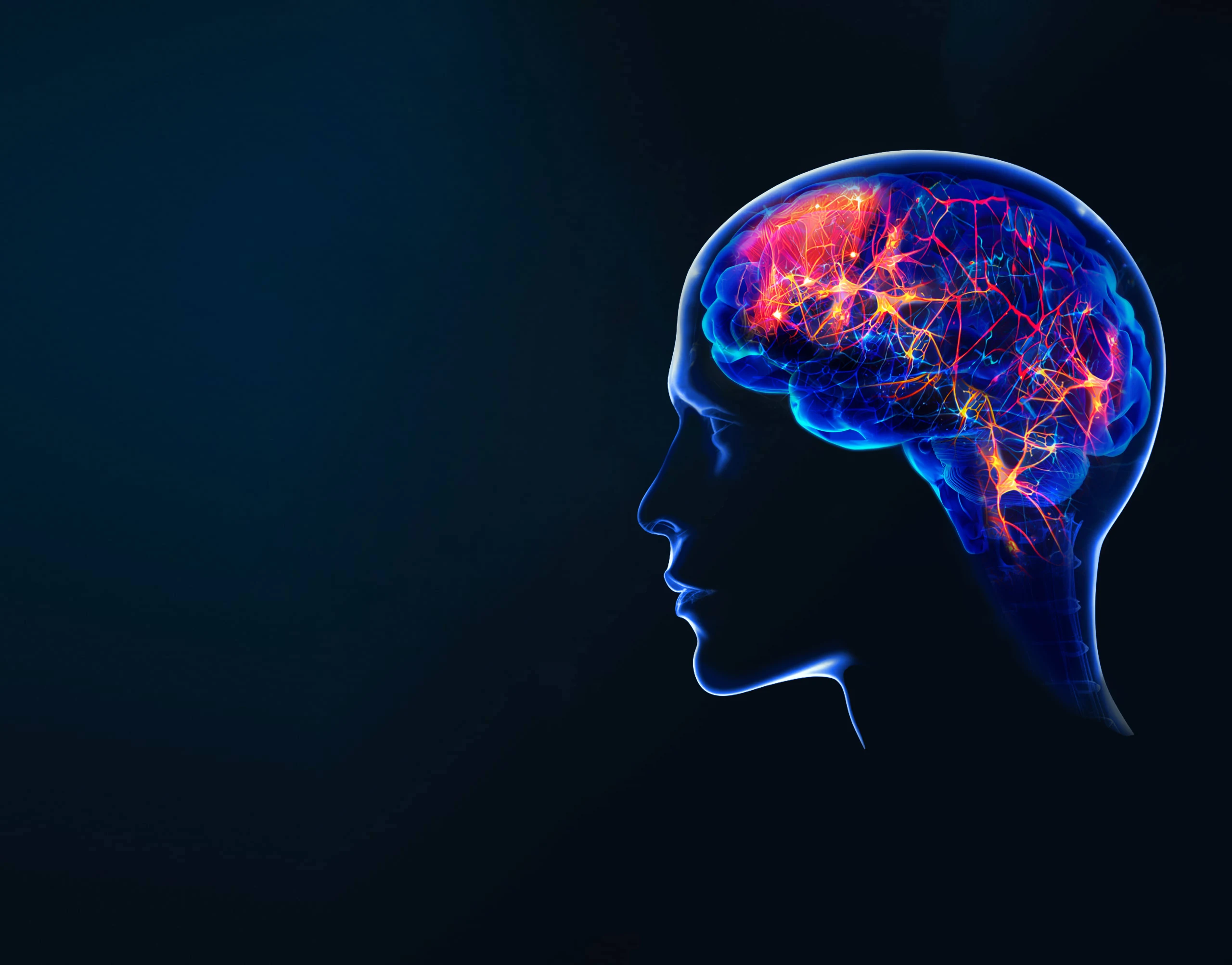
Transcranial magnetic stimulation, TMS, uses an electromagnetic coil held against the scalp. Each pulse induces a brief electric current in the cortex beneath it, usually over the dorsolateral prefrontal cortex at the front of the head. Repeated pulses, delivered in trains or in short bursts, change the activity of that region for a time. The procedure needs no anaesthetic and you sit in a chair.
Exomind is BTL's TMS device, built around a figure-of-eight coil. In the FDA summary for BTL's TMS system the medical depression protocol is 10 Hz pulses at 120% of the patient's motor threshold, 3,000 pulses per session, for 18.75 to 37.5 minutes, daily for weeks. The manufacturer's wellbeing preset, as its clinical training deck sets it out, is different: 5 Hz pulses at 70% of the motor threshold, 6,440 pulses in about 24 minutes, four to six sessions once or twice a week, two to ten days apart; its depression and OCD presets run 30 sessions. That difference matters, because the evidence for TMS belongs to the medical protocols and the marketing belongs to the wellbeing one.
What it is cleared for, and what it is not
- In the United States, TMS devices are regulated as a class defined by their use in depression. BTL's devices are cleared through the 510(k) route for treating major depressive disorder in adults who have not improved on antidepressant medication, for reducing anxiety symptoms in those patients, as an adjunct in obsessive-compulsive disorder, and as an adjunct in adolescent depression. The clearances rest on equivalence to earlier devices, with no new clinical trials, and they are for prescription use. There is no clearance for wellbeing, focus, sleep or any use in healthy people. The US Clinical TMS Society noted in a 2026 statement that, as of , no peer-reviewed publication had shown Exomind or its protocol to be effective for the wide range of conditions mentioned in the press.
- In Europe and the UK, the manufacturer's clinical training deck gives the CE intended use as repetitive TMS for major depressive disorder in adults who have not improved on antidepressant medication, reduction of comorbid anxiety symptoms in those patients, an adjunct for obsessive-compulsive disorder, and binge eating disorder. Every one of those is a medical condition treated under a psychiatrist; the wellbeing preset is the manufacturer's own programme outside that intended use, and we quote no UK registration number. One London psychiatric clinic states plainly that Exomind "is not currently licensed for wellness purposes by any regulatory body". No regulator has cleared the wellbeing use, and we describe it as exactly that.
- What we may and may not say. UK advertising rules restrict claims to treat conditions such as depression and anxiety, which need medical supervision. The Advertising Standards Authority upheld complaints on against a clinic claiming that brain mapping and TMS could treat traits of autism, and on against a product advertised as ending ADHD and anxiety. In the clinic case testimonials were not accepted as evidence, and claims of this kind breach the rules on medical claims and on discouraging essential treatment. We therefore make no claim to treat any condition. Exomind here is a wellbeing session for healthy adults, and we send anyone with symptoms of depression or anxiety to their GP, whose first-line options for depression under NICE are talking therapy and, where appropriate, medication.
The manufacturer's own description. BTL's international page calls Exomind a "non-invasive approach to mental well-being" and says it is "intended for the treatment of depression, anxiety, obsessive-compulsive behaviors, and binge eating"; its UK page gives the narrower CE wording above. It quotes "88% experienced mental well-being improvement", "78% felt improvement in sleeping onset and stress management", "66% felt less depressed" and "74% achieved complete recovery from binge eating", each marked "data on file", and lists four ExoTMS studies by title (mental wellbeing, a sham-controlled sleep study, postmenopausal women, binge eating) without journal or year. We quote them so you can see what the manufacturer claims; none is a peer-reviewed controlled result we could read.
What we offer. The wellbeing programme, for healthy adults, at the manufacturer's wellbeing preset. For a diagnosed condition inside the intended use (depression that has not responded to medication, anxiety alongside it, obsessive-compulsive disorder, binge eating disorder), our doctor will tell you plainly whether a medical course is appropriate; it is delivered only under medical supervision, with your GP or psychiatrist in agreement, at the manufacturer's medical protocol of 30 sessions, and never as a substitute for the care you are already receiving.
Does Exomind work? What the evidence shows
For depression under medical protocols, TMS beats sham in controlled trials, with a response in a minority of patients. For wellbeing in healthy people after six short sessions, nobody knows yet, and we say so.
- Depression, the medical evidence. A 2014 meta-analysis of 29 sham-controlled trials (1,371 patients; Berlim and colleagues, Psychological Medicine) found that after about 13 sessions 29% responded and 19% went into remission, against 10% and 5% with sham. A 2019 network analysis of 113 trials (6,750 patients; Mutz and colleagues, BMJ) put the odds of a response with high-frequency TMS at about three times those with sham, with electroconvulsive therapy stronger still. In a 414-patient trial of two TMS protocols given daily for four to six weeks (Blumberger and colleagues, Lancet 2018), depression scores fell from about 23.5 to 13.4 in both groups, with no sham arm. A real-world series of 307 patients without a sham arm reported a response in about 42 to 58% (Carpenter and colleagues, 2012). NICE reviewed the procedure in : no major safety concerns, short-term efficacy adequate, response variable, and patients should be told it may not help. None of this is the Exomind wellbeing protocol.
- Anxiety and sleep. TMS has reduced anxiety scores in people with diagnosed generalised anxiety disorder, on top of medication, in trials a 2025 review calls heterogeneous and few. A 2021 meta-analysis of 27 studies found better sleep scores in people with insomnia, with varied protocols. Both are patient populations treated with many sessions, not healthy adults having six.
- Healthy adults, focus and cognition. The international safety consensus on brain stimulation says its cognitive effect in healthy people is "at best weak to moderate, and generally short-lasting". A 2025 review of prefrontal TMS in healthy adults found an effect on cognition only after excluding outlying studies, with wide variation. We found no study that supports "improves focus" after a short course.
- Exomind itself. The manufacturer has run three registered studies: a 38-person wellbeing study with four sessions and no comparison group, which also enrolled people with low mood, measuring a self-rated wellbeing scale, announced as showing improvement at three months in a company summary we could not find in a journal; a 43-person sleep and stress trial with a sham arm in people with poor sleep scores, completed in , with no results published that we could find; and a 12-person brain-wave study. That is the whole evidence base for the wellbeing use that we could find, and it is early, small and the manufacturer's. The manufacturer's clinical training deck, which we hold, gives the headline "88% improved mental wellbeing at three months" from a 33-person study with no comparison group, marked "data on file"; its only sham-controlled figures (about three times and twice the improvement of sham at one month) come from a 51-person study of cravings, not wellbeing; and it shows the sleep and stress study still recruiting, where the registry lists it completed with no results. The deck also claims effects on binge eating and weight from small uncontrolled studies; we neither offer nor claim those.
So the realistic picture is this. The device is real and its medical use is well studied. The wellbeing use is a plausible extension that has not yet been tested properly in people like you. In our experience some clients describe feeling calmer or clearer after a course, and we record that as what they tell us, not as proof. If you want proof before you spend, wait for the sham-controlled results.
Who Exomind suits, and who it does not
It suits healthy adults who are curious about a non-drug, needle-free session for general wellbeing, who understand that the evidence is early, and who are not using it in place of care for a condition. If you have low mood, anxiety, poor sleep that worries you, or any mental health diagnosis, the right first step is your GP, and we will say so at the consultation rather than sell you a course.
Who should not have it, from the manufacturer's clinical training deck (its contraindications, and the groups in which it says safety is not established), the international safety consensus and published screening lists, confirmed by the doctor at your screening:
- Metal within 30 cm of the coil: cochlear implants, aneurysm clips, stents, bullet or metal fragments, jewellery and hair clips, and tattoos with metallic ink; the manufacturer excepts standard fillings, single dental implants, bridges and braces.
- Any implanted stimulator, active or not, including its leads: deep brain, vagus nerve and ocular stimulators, a cardiac pacemaker or defibrillator.
- A seizure tendency or a history of epilepsy; a medicine that lowers the seizure threshold, or any change to such a medicine in the last 30 days.
- Pregnancy. Fever. A tumour, benign or malignant, within 30 cm of the coil.
- Anticoagulant treatment, a bleeding or clotting disorder, decompensated heart disease, kidney failure or dialysis, or any severe ongoing illness.
- A brain tumour or aneurysm, raised pressure in the head, a head injury with loss of consciousness, a stroke or brain surgery, or acute withdrawal from alcohol or drugs.
- Bipolar disorder, any psychotic illness or schizoaffective disorder, suicidal thoughts, or a history of electroconvulsive or vagus nerve therapy: these need psychiatric care, not a wellbeing session, and the manufacturer lists them among the groups in which safety is not established.
- Under 18.
- Current symptoms of depression or anxiety, thoughts of self-harm, or a mental health condition under treatment: the wellbeing programme is not for you; see your GP instead (the medical route is described above), and if you feel unsafe call NHS 111, Samaritans on 116 123, or 999 in an emergency.
- Hearing loss or tinnitus, where we take advice first; everyone wears hearing protection during the session.
- Swollen, infected or inflamed skin where the coil would rest.
Not sure you are suitable? Ask the clinician, it is free
What a session is like, step by step
- Screening. A doctor goes through the exclusion list above, your medical and mental health history and your medicines. If anything suggests a condition that needs treatment, you are referred, not treated. You get a plan and a price in writing. Consultations and follow-up reviews are free.
- Setting up. You sit in a chair with earplugs in. The clinician finds your motor threshold, the pulse strength that makes a thumb muscle twitch, and sets the intensity from that; the wellbeing protocol uses less than the medical one.
- The session. The coil rests against the front of your head and delivers pulses in trains. You feel tapping on the scalp and may feel your face or jaw twitch with the pulses; it is loud, hence the earplugs. The manufacturer's wellbeing preset runs about 24 minutes; the appointment takes about 30.
- After. You stand up and go, and you can drive. Some people have a mild headache or a tender scalp for a few hours.
How many sessions, when you see the result, how long it lasts
| Feature | What to expect |
|---|---|
| Sessions in a course | 6, once or twice a week, which is the course most aesthetic clinics sell and the top of the manufacturer's wellbeing preset (four to six sessions, two to ten days apart); medical TMS for depression is 20 to 30 daily sessions over four to six weeks, a different treatment |
| Session length | About 24 minutes of stimulation inside a 30-minute appointment |
| First change | Unknown from any trial of the wellbeing protocol; in our experience some clients report feeling calmer after two or three sessions, and some report nothing |
| Main result | The manufacturer's wellbeing study measured a self-rated scale at one and three months; its sham-controlled sleep trial has no published results |
| How long it lasts | Unknown. The "six to twelve months" quoted on some pages has no study behind it |
| Maintenance | No published schedule for the wellbeing use. We review you after the course and decide together |
What Exomind costs in London
Exomind is priced per session and sold in courses. Among the London clinics whose pages we read in : a psychiatrist-led Harley Street clinic lists eight sessions at £3,000 and twelve at £5,000, after a psychiatric consultation of £500 to £685 that is credited against treatment; a Marylebone aesthetic clinic lists £500 for a single session, £450 each for four, £375 each for eight and £333 each for fifteen, delivered by aesthetic therapists after a doctor's assessment; a Chelsea longevity clinic lists from £329 a session, four for £1,750 and six for £2,250. Two other clinics we found state no price.
At our clinic the price depends on the number of sessions, so we quote it in writing at the free consultation. We price match any comparable written quote, and the consultation and every follow-up review are free whatever you decide.
A warning on comparing. A psychiatrist-led service treating depression and an aesthetic clinic offering wellbeing sessions are selling different things at different doses, even on the same device. Ask which one you are buying, who screens you, who holds the coil, and what the clinic will do if your screening suggests a condition.
Consultations and follow-ups are free
Results you can check
There are no before-and-after photographs for a wellbeing session, and we do not publish clients' descriptions as evidence. We collect reviews through review.clinic: 4.9 out of 5 from 52 reviews in October 2026. They are personal accounts, not evidence, and any effect a reviewer describes on sleep, focus or stress is not a claim we make.
Exomind compared with the alternatives
| Feature | Exomind wellbeing course | Medical TMS for depression | Talking therapy and medication | Exercise, sleep and mindfulness |
|---|---|---|---|---|
| What it is | 6 short sessions of magnetic stimulation at a lower intensity, for healthy adults | 20 to 30 daily sessions at the medical dose, under a psychiatrist, for depression that has not responded to medication | NICE's first-line treatments for depression | Widely recommended for everyday wellbeing, at no cost |
| Evidence | Manufacturer's small studies, no published controlled result | Sham-controlled trials and NICE review; odds of response about three times sham | The largest evidence base | Widely recommended for general wellbeing; we have not compared them with Exomind |
| Who provides it | Aesthetic and wellbeing clinics | Psychiatric services, NHS in a few places and private | GP referral, NHS and private | Yourself |
| Side effects | Headache, scalp discomfort; rare seizure | The same; headache in about two thirds in the largest trial | Vary by treatment | Low |
| Suits | Curious healthy adults who accept early evidence | People with depression under psychiatric care | Anyone with symptoms of depression or anxiety | Everyone |
Exomind vs medical TMS. The same technology, a different dose and a different purpose. If you have depression, see your GP first: NICE's first-line treatments are talking therapy and medication, and medical TMS under a psychiatrist is a later option for people who have not improved on those, which your GP can advise on. A six-session wellbeing course is not a substitute for any of them and we will not sell it as one.
Exomind vs medication and therapy. Not comparable and not a choice we offer. Nothing about a wellbeing session should delay you seeing your GP if you have symptoms, and our screening is built to catch that.
Exomind vs doing nothing new. Honest comparison: exercise, sleep and mindfulness are widely recommended for everyday wellbeing, they cost nothing, and we have not compared them with Exomind. Exomind is for people who have those in place and want to try something more, knowing the evidence is early.
Consultations and follow-ups are free
Side effects, and the risks nobody writes about
Common: headache and scalp discomfort during and after sessions, affecting about a quarter of people in a 2006 review of TMS outside the motor cortex, more often with frontal stimulation, and almost two thirds in the 414-patient depression trial. These figures come from the medical protocols at a higher intensity than the wellbeing use, which has no safety data of its own beyond the small trials. The manufacturer's own deck lists headache, scalp pain and "elevation of mood" as common and seizure as low incidence, without figures.
Reported: twitching of the face or jaw during pulses in a small proportion of patients and drowsiness afterwards, both noted by NICE; a temporary change in hearing without hearing protection, which is why earplugs are not optional; temporary confusion or memory complaints, which specialists have reported to NICE.
Rare and serious: a seizure. A 2021 self-reported survey of TMS clinics (Clinical TMS Society) found 18 seizures in about 587,000 sessions, about 1 in 32,000, lower still for figure-of-eight coils like Exomind's; because clinics reported their own figures, the true rate may be higher. A seizure history and alcohol or drug withdrawal are the screening questions that matter most. TMS has also triggered a manic episode and psychotic symptoms in a small number of patients treated for depression, which is why bipolar disorder and psychosis are on the exclusion list as a precaution.
The risk nobody writes about is the one the advertising regulator writes about: that a wellbeing session is bought instead of treatment by someone who needs it. Our screening exists to stop that, and if we think you need your GP, we say so and do not treat.
How to choose an Exomind clinic in London
- Ask who screens you and what they are. Ours is a doctor, and this guide is reviewed by Dr Marie Duggan, GMC 7488383.
- Ask what you are buying. A wellbeing session for healthy adults, or medical treatment of a condition under a psychiatrist. A clinic that blurs the two risks breaching the advertising code.
- Ask for the exclusion list before you book, and whether they measure your motor threshold.
- Ask what evidence they have for the claims on their page. Percentages with no study, claims of clinical proof, gym metaphors for the brain and "no side effects" are warning lights.
- Ask about hearing protection.
- Treat any claim of FDA approval as wrong. BTL says the device is FDA-cleared, which is not approval, and only for depression and related conditions in the US, not for wellbeing.
Aftercare
Nothing to do. Drink water, carry on with your day, and take an ordinary painkiller if you have a headache. Tell us about any headache that does not settle, any change in hearing, any unusual change in mood such as feeling unusually high or agitated (which you should also raise with your GP the same day), or anything that frightens you, and call 999 or go to an emergency department for a first seizure or one that does not stop, as you would for any seizure.
Consultations and follow-ups are free
Frequently asked questions
What is Exomind?
A transcranial magnetic stimulation device made by BTL. A coil held against the front of the head sends magnetic pulses that induce small currents in the brain. Its CE intended use, per the manufacturer, is medical: depression that has not responded to medication, anxiety symptoms in those patients, obsessive-compulsive disorder and binge eating disorder, treated under a psychiatrist. Exomind is also marketed for general wellbeing in healthy adults, in short courses at a lower intensity, which is what we offer.
Does Exomind treat depression?
Not with the wellbeing programme. TMS at the medical dose, over 20 to 30 daily sessions, is a recognised treatment for depression that has not responded to medication, and it is inside the manufacturer's intended use for Exomind. If that is your situation, see your GP first; with your GP or psychiatrist in agreement, our doctor can arrange a medical course under medical supervision at the manufacturer's 30-session protocol. A six-session wellbeing course is not that treatment and we never sell it as one.
Does Exomind help with anxiety or sleep?
We do not claim the wellbeing programme treats anxiety or sleep problems. The manufacturer quotes "78% felt improvement in sleeping onset and stress management", marked "data on file", and lists a sham-controlled sleep study by title that we could not read. In research, TMS has reduced anxiety scores in people with diagnosed generalised anxiety disorder, alongside medication, and a 2021 meta-analysis of 27 studies found better sleep scores in people with insomnia, with varied protocols. For healthy adults having six sessions there is no published evidence; the manufacturer's sham-controlled sleep trial has not reported. If anxiety or poor sleep is troubling you, see your GP first.
Does Exomind improve focus?
No study we found supports it. The international safety consensus calls the cognitive effect of brain stimulation in healthy people weak to moderate and short-lasting. Pages that promise "enhanced focus within one to two weeks" are quoting nothing.
Is Exomind approved by the FDA?
No. BTL's TMS devices are FDA-cleared, which is a finding of equivalence to earlier devices, for depression in adults who have not improved on medication, for anxiety symptoms in those patients, and as an adjunct in OCD. There is no clearance for wellbeing, focus or sleep.
How many sessions do I need?
Most aesthetic clinics sell a course of six, the top of the manufacturer's wellbeing preset of four to six sessions once or twice a week, each about 24 minutes of stimulation; some sell four, eight or more. Medical TMS for depression is 20 to 30 daily sessions, a different treatment at a higher dose.
What does it feel like?
Tapping on the scalp with each pulse, sometimes a twitch of the face or jaw, and a loud clicking that is why you wear earplugs. In our experience most people find it tolerable; some find the scalp tender afterwards.
Is there any downtime?
None. You can drive and go back to work. A mild headache for a few hours is the commonest after-effect reported in the trials.
What are the side effects?
Headache and scalp discomfort are common; twitching during pulses and drowsiness, less often. Hearing needs protecting. Rarely, a seizure, about 1 in 32,000 sessions in the Clinical TMS Society's 2021 survey, which is why we screen for seizure history and implants. A manic episode and psychotic symptoms have been triggered in a small number of patients treated for depression, so people with bipolar disorder or psychosis should not have it.
Who should not have Exomind?
Anyone with an implant in or near the head or a pacemaker, a history of seizures, pregnancy, a brain tumour or recent head injury, bipolar disorder or a psychotic illness, acute alcohol or drug withdrawal, or under 18. Anyone with current symptoms of depression or anxiety, thoughts of self-harm, or a mental health condition under treatment should see their GP instead, and if you feel unsafe call NHS 111, Samaritans on 116 123, or 999 in an emergency. Hearing problems need advice first.
How long do the results last?
Nobody knows for the wellbeing use; no trial has measured it. The "six to twelve months" on some pages has no study behind it. We review you after the course and decide together.
Is Exomind the same as TMS?
It is one TMS device. Medical TMS for depression and the wellbeing course sold in clinics use the same technology at different doses for different purposes, and only the first has published controlled evidence.
Is Exomind safe?
At the medical dose, NICE found no major safety concerns in its 2015 review, with headache common and seizure rare. The wellbeing use runs at a lower intensity, though it has no safety data of its own beyond the manufacturer's small trials. Safety depends on screening, which is why a doctor goes through the exclusion list before you start.
How much does Exomind cost?
Among the London clinics we checked in October 2026, a session is advertised from about £329 to £500 and a course of six to eight from about £2,250 to £3,000; a psychiatrist-led service charges £3,000 for eight sessions after a consultation of £500 to £685. We quote in writing at a free consultation and price match any comparable written quote.
Should I try Exomind instead of medication or therapy?
No. If you have symptoms of depression or anxiety, see your GP; NICE's first-line treatments for depression are talking therapy and, where appropriate, medication, and medical TMS exists for those who do not respond, including, with your GP or psychiatrist in agreement, a supervised course here. The wellbeing programme is for healthy adults, and our screening will send you to your GP if it should.
Can I have Exomind if I take antidepressants?
If you take antidepressants for a mental health condition, Exomind is not for you while you are under treatment, and your prescriber is the right person to talk to. If you take them for another reason, such as pain, tell us at the screening and we will ask your prescriber first. One of the manufacturer's wellbeing trials allowed people on a stable dose; that does not change our rule.
Where is the clinic and how do I book?
Exomind Clinic, 8 Devonshire Place, London W1G 6HP, in the Harley Street medical district, a short walk from Regent's Park, Great Portland Street and Baker Street stations. We are open Monday to Friday 9am to 7pm and Saturday 9am to 6pm. Consultations and follow-up reviews are free. Call 0207 043 8142 or use the form below. If you would rather be contacted by e-mail only, tell the team member who calls to book you and we will switch to e-mail.
